
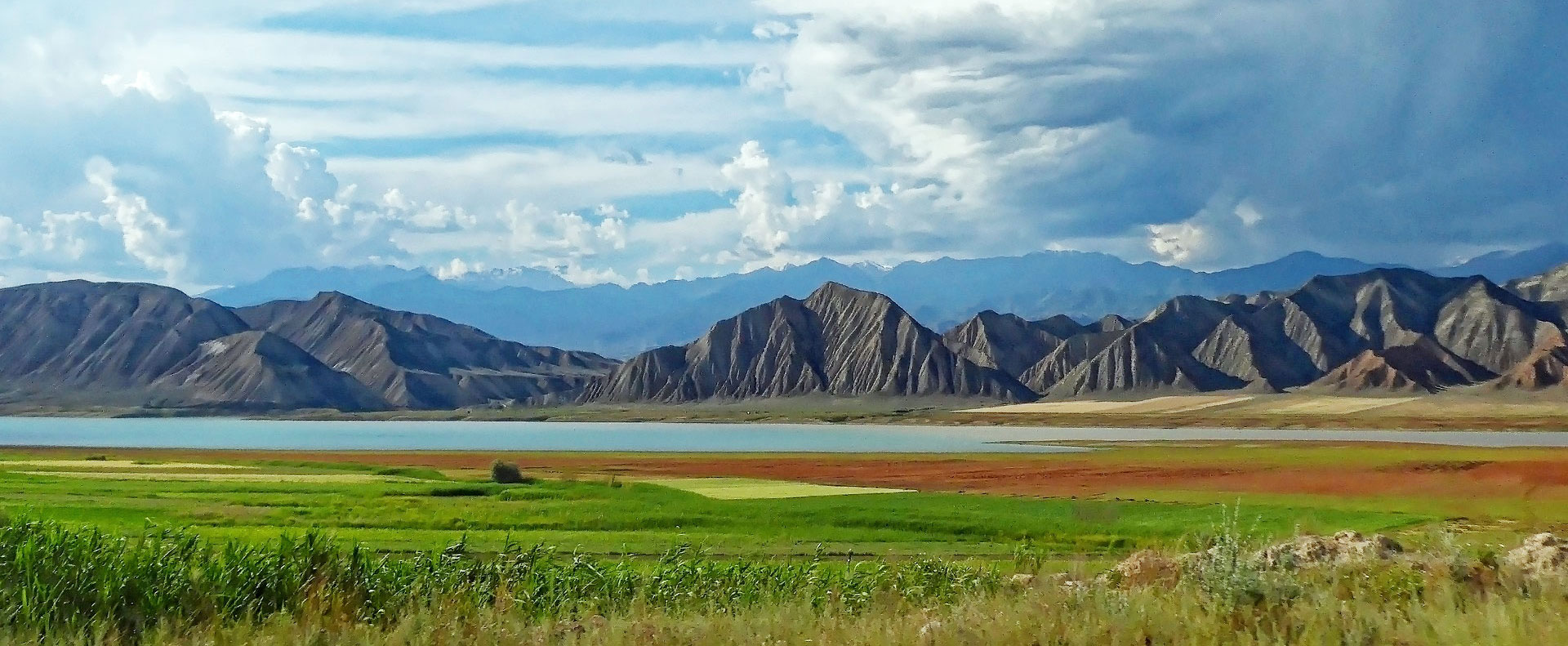
Kyrgyzstan is a country located in Central Asia, often referred to as the “Land of the Celestial Mountains.” It shares borders with Kazakhstan, Uzbekistan, Tajikistan, and China. This country is renowned for its majestic mountains, vast grasslands, and lakes, offering diverse and stunning natural landscapes.
The terrain of Kyrgyzstan is predominantly mountainous, with the Tien Shan mountain range dominating the landscape. It is home to notable peaks, including the world’s second-highest peak, Khan Tengri. The country boasts numerous breathtaking gorges, glaciers, and high-altitude lakes, with the most famous being Lake Issyk-Kul, one of the largest alpine lakes in Central Asia, always called the “Pearl of the Tian Shan.”

Beekeeping in Kyrgyzstan: A Sweet Legacy from the Soviet Era
During the Soviet Union period, Kyrgyzstan played a significant role as a beekeeping base. The country’s favorable natural environment, with its diverse flora and vast areas of untouched meadows, made it an ideal location for beekeeping activities.
Kyrgyzstan’s mountainous regions were particularly suitable for beekeeping, as they offered a variety of flowering plants and herbs, and more importantly, it is clean and unpolluted. The bees had access to a rich source of nectar and pollen from the alpine meadows, which contributed to the production of high-quality honey.
Beekeeping in Kyrgyzstan was organized on a large scale, with state-run collective farms and cooperatives involved in honey production. These entities managed apiaries and employed trained beekeepers to ensure the efficient management of bee colonies.
The honey produced in Kyrgyzstan gained recognition for its exceptional quality and unique flavors. The diversity of the region’s flora, combined with the pristine environment, resulted in a wide range of honey varieties, each with its distinct taste and aroma. Some popular types of Kyrgyz honey included mountain flower honey, acacia honey, and honey derived from specific plants like buckwheat or thyme.
The honey was not only consumed domestically but also exported to other regions of the Soviet Union. It found its way to markets across the USSR, where it was highly regarded for its natural and pure qualities.
Beekeeping in Kyrgyzstan during the USSR period also contributed to the local economy and provided employment opportunities for many people. Beekeeping cooperatives and farms served as centers for training and education in apiculture, fostering knowledge and expertise in beekeeping practices.
Today, Kyrgyzstan continues to be known for its beekeeping traditions and the production of high-quality honey. The country’s commitment to preserving its natural environment and promoting sustainable beekeeping practices ensures the continuation of this important industry. Visitors to Kyrgyzstan can still explore and savor the rich flavors of its honey, experiencing a taste that has roots in the country’s beekeeping legacy.